Sending email from a new IP address is one of the most critical moments in any email program. Inbox providers have no prior history to evaluate, which means every signal you generate in those early days carries extra weight. Understanding how inbox providers assess a new IP—and what you can do to build trust quickly—is the foundation of a strong IP warming strategy.
Whether you are launching a new sending infrastructure, migrating to a new ESP, or scaling your email volume, the rules are the same: reputation must be earned, not assumed. This guide walks through exactly how inbox providers evaluate a new IP address and what you can do to make that process work in your favor.
What does an inbox provider see when a new IP sends email?
When a new IP address sends its first email, inbox providers see a completely blank slate. There is no historical data, no reputation score, and no trust established. The IP is treated with caution by default, and every message it sends is scrutinized more heavily than one arriving from a known, established sender.
Inbox providers like Gmail, Microsoft, and Yahoo use automated filtering systems that evaluate incoming mail in real time. A new IP triggers what is often called a “cold start” evaluation, where the provider looks at the immediate signals from that first batch of messages to decide how to treat future mail. Volume spikes, engagement rates, and authentication records all feed into this initial assessment. A poor first impression can take weeks to recover from, which is why preparation before you send that first message is so important.
What signals do inbox providers use to evaluate IP reputation?
Inbox providers evaluate IP reputation using a combination of technical signals, engagement data, and complaint metrics. The most important signals include bounce rates, spam complaint rates, spam trap hits, unsubscribe rates, and positive engagement indicators like opens and clicks. Authentication records such as SPF, DKIM, and DMARC also play a foundational role.
On the technical side, inbox providers check whether your IP is listed on any blocklists, whether your sending domain aligns with your IP infrastructure, and whether your authentication is correctly configured. On the behavioral side, they watch how recipients respond to your mail. High engagement signals trust; high complaint rates signal the opposite. Even the time of day you send, the consistency of your sending volume, and the ratio of new addresses to established ones on your list can influence how providers score your IP.
- Bounce rate: A high hard-bounce rate suggests poor list hygiene and damages reputation quickly.
- Spam complaint rate: Even a small percentage of complaints can suppress inbox placement.
- Spam trap hits: Sending to trap addresses signals that your list-acquisition practices are problematic.
- Engagement: Opens, clicks, and replies tell providers that recipients want your mail.
- Authentication: SPF, DKIM, and DMARC confirm you are who you say you are.
How long does it take for an IP address to build a reputation?
Building a solid IP reputation typically takes between four and eight weeks of consistent, well-managed sending. The exact timeline depends on your sending volume, the quality of your list, and how well you manage the warming process. Higher-volume senders can establish a reputation faster, but only if engagement metrics remain strong throughout.
It is worth noting that reputation is not built in a straight line. You may see good inbox placement early on, then experience a dip as providers gather more data and apply stricter filters. This is normal. The key is to maintain clean lists, send to engaged subscribers, and avoid any sudden volume spikes that could trigger filtering. Patience and consistency are the most reliable tools during this phase.
What is IP warming and why does it matter for deliverability?
IP warming is the process of gradually increasing the volume of email sent from a new IP address over a set period of time, typically four to eight weeks. The goal is to build a positive sending reputation with inbox providers by demonstrating consistent, low-risk sending behavior before ramping up to full volume.
Deliverability depends heavily on sender reputation, and reputation is built through data. When you warm an IP slowly, you give inbox providers time to observe your sending patterns, measure engagement, and classify your mail accurately. Jumping straight to full volume without warming is one of the most common reasons new IP addresses end up in spam folders or get blocked entirely. A structured IP warming strategy as part of your email migration and warm-up plan is not optional for serious senders; it is a fundamental requirement for reliable inbox placement.
What a typical IP warming schedule looks like
A warming schedule usually starts with a small daily send, often a few hundred to a few thousand messages, directed at your most engaged subscribers. Volume increases incrementally every few days, with pauses built in to monitor metrics. If complaint rates or bounce rates rise, the schedule slows down. The process is iterative and requires active monitoring rather than a set-it-and-forget-it approach.
What mistakes cause a new IP address to fail reputation checks?
The most common mistakes that cause a new IP to fail reputation checks are sending too much volume too quickly, mailing to unengaged or outdated lists, skipping email authentication setup, and ignoring early warning signs in deliverability metrics. Any one of these mistakes can set back your reputation-building efforts by weeks.
Sending to a list that has not been cleaned recently is particularly damaging during the warming phase. Inactive addresses, spam traps, and invalid emails generate exactly the negative signals that inbox providers use to flag a new IP as suspicious. Similarly, if your authentication records are missing or misconfigured, providers have no way to verify your identity, which reduces trust immediately. Many senders also make the mistake of prioritizing volume over engagement, blasting their entire list at once rather than starting with subscribers who are most likely to open and click.
- Skipping list validation before the first send
- Ignoring bounce and complaint rate thresholds
- Sending inconsistently or pausing for long periods during warming
- Failing to set up SPF, DKIM, and DMARC before sending
- Starting with cold or purchased lists instead of engaged subscribers
How can email authentication help a new IP gain inbox trust?
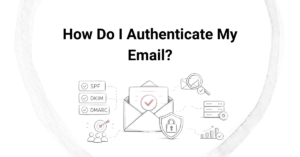
Email authentication helps a new IP gain inbox trust by proving to inbox providers that your messages are legitimate and that your sending infrastructure is properly configured. SPF, DKIM, and DMARC are the three core authentication protocols, and having all three correctly set up is a baseline requirement for building a reputation on a new IP.
SPF tells inbox providers which IP addresses are authorized to send on behalf of your domain. DKIM adds a cryptographic signature to your messages that verifies they have not been tampered with in transit. DMARC ties SPF and DKIM together and tells providers what to do if a message fails authentication checks. Beyond these three, BIMI is an emerging standard that allows senders to display a verified brand logo in the inbox, which can further reinforce trust and improve engagement rates.
Authentication does not directly guarantee inbox placement, but without it, you are asking inbox providers to trust an unknown IP with no verifiable identity. That is a very difficult position to be in during the critical early weeks of reputation building. Getting authentication right before you send a single message is one of the highest-leverage actions you can take.
How Email Industries helps with IP warming and email migrations
We specialize in guiding organizations through the IP warming process and complex email migrations, helping you avoid the costly mistakes that can derail a new sending infrastructure before it ever gets off the ground. Our team brings more than two decades of deliverability expertise to every engagement.
Here is what we bring to your IP warming and migration projects:
- Custom warming schedules built around your specific volume, audience, and sending history
- List validation with Alfred, our email verification and threat detection tool, to remove risky addresses before your first send
- Authentication audits to ensure SPF, DKIM, and DMARC are correctly configured before you begin warming
- Real-time monitoring of bounce rates, complaint rates, and inbox placement throughout the warming period
- Expert consulting to troubleshoot issues and adjust your strategy as data comes in
If you are planning an email migration or need to warm a new IP address, getting expert support from the start can save you weeks of setbacks and protect your sender reputation for the long term. Explore our email migration and warmup services to learn more about how we approach this process, or contact us directly to talk through your specific situation.
Related Articles
- How does SPF work in emails?
- How do email advertising agencies handle underperforming campaigns?
- How do email advertising agencies handle crisis management?
- How do email advertising agencies ensure brand consistency?
- What data do you need to transfer during an email platform migration?
- How do you know when your email platform migration is complete?
- How do you migrate to a new email platform without losing deliverability?
- What role does authentication play in an IP warming strategy?
- How often do full service agencies provide performance reports?
- How do agencies create abandoned cart email sequences?
- What is the difference between general email agencies and ecommerce specialists?
- What lead magnet strategies do email agencies recommend?
- How do agencies handle deliverability for high-volume email senders?
- How do agencies set up proper email authentication?
- What are the warning signs your email delivery needs expert attention?