
Sending email from a new domain is one of the most critical moments in any email program. Get it right, and you build a strong sender reputation that carries your campaigns into the inbox for years to come. Get it wrong, and you risk landing in spam folders before your audience ever gets a chance to engage. Domain warmup is the process that makes the difference, and understanding how it works is essential for anyone serious about email deliverability.
Whether you are launching a brand-new sending domain, migrating to a new infrastructure, or recovering from a reputation problem, the principles of domain warmup apply. This guide walks through the key questions senders ask about the process, from the basics to the common pitfalls that trip up even experienced email marketers.
What is domain warmup for email senders?
Domain warmup is the gradual process of building a positive sending reputation for a new or previously unused domain by starting with low email volumes and slowly increasing them over time. Mailbox providers like Gmail, Yahoo, and Microsoft evaluate sending behavior when they see a new domain, and warmup gives them the positive signals they need to trust your mail.
When a domain has no sending history, mailbox providers treat it with caution. They have no data to determine whether it belongs to a legitimate sender or a spammer. By starting small and sending only to your most engaged subscribers first, you demonstrate responsible sending behavior and allow inbox providers to build a positive picture of your domain before you ramp up to full volume.
Domain warmup applies to the sending domain in your From address or, in some configurations, the domain used in your email authentication records. It is distinct from IP warmup, but it works hand in hand with it to establish overall sender credibility.
Why does domain warmup matter for email deliverability?
Domain warmup matters because mailbox providers use domain reputation as a core signal when deciding whether to deliver your email to the inbox, the spam folder, or reject it entirely. A domain with no history and a sudden spike in sending volume looks suspicious, and providers will filter or block those messages to protect their users.
Sender reputation is built from a combination of signals, including engagement rates, spam complaint rates, bounce rates, and sending consistency. When you skip warmup and send large volumes immediately, you have no positive history to offset any negative signals. Even a small spike in complaints or bounces can permanently damage a fresh domain before it ever gets a fair chance.
The stakes are particularly high during Migrations and Warmups because you are often moving an established audience to a new sending infrastructure. Your subscribers may be accustomed to receiving your mail, but mailbox providers are seeing your new domain for the first time. A proper warmup protects your revenue and your relationship with your audience during that transition.
How does domain warmup actually work step by step?
Domain warmup works by progressively increasing your sending volume over a defined schedule, starting with your most engaged subscribers and expanding to broader segments as your domain earns a positive reputation. The core mechanism is giving mailbox providers enough positive engagement data at each volume level before moving to the next.
Here is how the process typically unfolds:
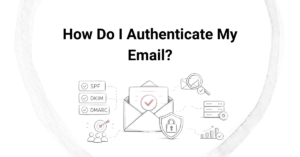
- Set up proper authentication first. Before sending a single message, confirm that SPF, DKIM, and DMARC are correctly configured for your sending domain. Authentication is the foundation that proves you are who you say you are.
- Start with your most engaged subscribers. In the first days or weeks, send only to people who have opened or clicked your emails recently. These recipients are most likely to engage positively, which sends strong trust signals to mailbox providers.
- Send consistent, valuable content. The content of your warmup emails should reflect your normal program. Do not send test or low-quality messages during warmup, as engagement rates during this period shape your long-term reputation.
- Increase volume gradually. Move through volume thresholds in a measured way, typically doubling or incrementally increasing your daily sends every few days, as long as your engagement and complaint metrics remain healthy.
- Monitor deliverability signals closely. Watch your inbox placement rates, spam complaint rates, bounce rates, and engagement metrics at each stage. If metrics deteriorate, pause and investigate before continuing to scale.
- Expand to less engaged segments last. Once your domain has a solid reputation, you can safely include less engaged subscribers, knowing the foundation of positive signals can absorb a lower engagement rate from that segment.
What’s the difference between domain warmup and IP warmup?
The key distinction is what is being warmed up. IP warmup builds the reputation of a dedicated sending IP address, while domain warmup builds the reputation of the sending domain itself. Both involve gradual volume increases, but they operate at different layers of your email infrastructure and are evaluated separately by mailbox providers.
Historically, IP reputation was the primary focus of warmup strategies because mailbox providers heavily weighted the IP address when filtering mail. Over time, however, providers have shifted significant weight toward domain reputation, which is harder for bad actors to reset simply by switching IP addresses.
When do you need both?
If you are setting up a brand-new dedicated IP alongside a new sending domain, you need to warm up both simultaneously. The good news is that the process is largely the same: start with low volume, high-engagement audiences, and scale gradually. The warmup schedule should satisfy the reputation requirements of both the IP and the domain at the same time.
If you are using a shared IP infrastructure through an email service provider, IP warmup is handled at the platform level. In that case, domain warmup becomes your primary responsibility and deserves your full attention.
How long does domain warmup take to complete?
Domain warmup typically takes between four and twelve weeks to complete, depending on your sending volume, list quality, and engagement rates. Lower-volume senders may complete the process in a month, while high-volume senders sending millions of messages per day may need three months or more to fully establish their domain reputation.
Several factors influence the timeline:
- Target sending volume: The higher your eventual daily send volume, the more reputation you need to build before reaching it, and the longer the warmup takes.
- List quality: A clean, engaged list accelerates warmup because positive engagement signals accumulate faster. A list with high bounce rates or disengaged subscribers slows the process.
- Sending consistency: Irregular sending during warmup confuses mailbox providers. Consistent daily or near-daily sends help providers build a reliable picture of your patterns.
- Complaint and bounce rates: If these metrics spike at any stage, you may need to pause and resolve the underlying issue before continuing, which extends the overall timeline.
Patience during warmup pays dividends. Rushing the process to hit volume targets faster is one of the most common causes of deliverability failures during and after warmup.
What mistakes should email senders avoid during domain warmup?
The most damaging mistakes during domain warmup include sending too much volume too quickly, starting with unengaged or unverified lists, skipping authentication setup, and sending inconsistently. Any of these errors can stall or permanently damage a domain’s reputation before it is fully established.
Here are the specific mistakes to watch out for:
- Skipping authentication: Sending without SPF, DKIM, and DMARC in place means mailbox providers cannot verify your identity, which undermines every positive signal you try to build.
- Increasing volume too quickly: Doubling your send volume every day instead of every few days does not give providers enough time to evaluate your behavior at each level.
- Using your full list from day one: Starting with less engaged or older subscribers generates low engagement and potentially high complaint rates right when your domain is most vulnerable.
- Sending to unverified or purchased lists: Invalid addresses cause hard bounces, and purchased lists often contain spam traps, both of which are devastating to a warming domain.
- Ignoring monitoring signals: Warmup is not a set-and-forget process. Failing to track inbox placement and complaint rates means you may not notice problems until serious damage is done.
- Sending inconsistently: Long gaps between sends during warmup allow the positive reputation you have built to decay, forcing you to rebuild momentum from a lower baseline.
How Email Industries helps with domain warmup
We have spent more than two decades helping organizations navigate the complexities of email deliverability, and domain warmup is one of the areas where expert guidance makes the biggest difference. When you work with us, you get a structured, proven approach to warming up new domains without the guesswork.
Here is how we support senders through the domain warmup process:
- Custom warmup schedules tailored to your sending volume, list size, and business timeline
- Authentication setup and verification to ensure SPF, DKIM, and DMARC are correctly configured before your first send
- List quality assessment using our Alfred email verification tool to remove invalid addresses, spam traps, and high-risk contacts before warmup begins
- Ongoing deliverability monitoring throughout the warmup period with expert interpretation of inbox placement and reputation signals
- Guidance on segmentation strategies to identify your most engaged subscribers for early warmup sends
- Troubleshooting support if issues arise mid-warmup, so problems are resolved quickly before they compound
Whether you are launching a new domain, managing an email migration, or recovering from a deliverability setback, we are here to help you build a strong sender reputation from the ground up. Reach out and learn more about our Migrations and Warmups services, or simply get in touch with our team directly to talk through your specific situation.
Related Articles
- How do you fix DMARC failures without breaking email delivery?
- Should you use DKIM if you already have SPF configured?
- What red flags indicate a poor full service email agency?
- How do email advertising agencies handle crisis management?
- What documentation do full service agencies require during setup?
- How do you test deliverability before completing an email platform migration?
- How does email platform migration affect your IP reputation?
- What is the role of domain age in email deliverability?
- What is an IP warming strategy in email marketing?
- How long does a domain warmup take?
- What is email marketing automation setup?
- What is the difference between email agencies and marketing automation platforms?
- How do email deliverability agencies track inbox placement rates?
- What happens when email delivery fails without professional help?
- What is email blacklist removal and how does it work?