Starting fresh with a new sending domain is one of the most consequential moments in any email program. Do it right, and you build a strong foundation for long-term inbox placement. Rush it, and you risk damaging your sender reputation before you’ve even had a chance to build it. Understanding domain warmup is essential for anyone running email campaigns, migrating to a new platform, or launching a new brand.
Whether you’re setting up a dedicated sending domain for the first time or switching email service providers, the principles of domain warmup apply directly to your deliverability success. This guide answers the most important questions about domain warmup so you can approach the process with confidence.
What is domain warmup and why does it matter?
Domain warmup is the process of gradually increasing email sending volume from a new or previously inactive domain over a defined period. Rather than sending thousands of emails on day one, you start small and scale up systematically, allowing mailbox providers like Gmail, Yahoo, and Outlook to observe your sending behavior and assess your trustworthiness before you reach full volume.
It matters because mailbox providers rely on historical data to make filtering decisions. A domain with no sending history is an unknown quantity, and unknown senders are treated with suspicion by default. By warming up your domain, you give providers the evidence they need to classify you as a legitimate sender, which directly influences whether your emails land in the inbox or the spam folder.
Domain warmup is especially critical during email migrations and warmup campaigns, where moving to a new sending infrastructure means starting your reputation from scratch, even if your brand has been sending email for years.
How does domain warmup affect sender reputation?
Domain warmup builds sender reputation by generating a consistent pattern of positive engagement signals from real recipients. When your emails receive opens, clicks, and replies during the warmup period, mailbox providers register these as indicators that your audience wants to hear from you, which strengthens your domain’s reputation score over time.
Sender reputation is not a single number but a composite assessment that mailbox providers calculate based on several factors:
- Engagement rates: How often recipients open, click, or reply to your messages
- Complaint rates: How frequently recipients mark your email as spam
- Bounce rates: How many of your emails fail to deliver due to invalid addresses
- Sending consistency: Whether your volume and frequency follow predictable patterns
- List hygiene: Whether you’re sending to clean, validated addresses
During warmup, each of these signals carries extra weight because providers are actively forming their first impression of your domain. Starting with your most engaged subscribers maximizes positive signals and sets a strong baseline that carries forward as you scale.
What happens if you skip domain warmup?
Skipping domain warmup almost always results in poor inbox placement, high spam rates, or outright blocking by major mailbox providers. When a new domain suddenly sends large volumes of email with no prior history, providers interpret this pattern as a red flag because it closely resembles the behavior of spammers and phishing campaigns.
The consequences can be severe and difficult to reverse. A domain that earns a poor reputation early on can face:
- Immediate filtering to spam folders across major providers
- Temporary blocks or deferrals that delay delivery by hours or days
- Permanent blacklisting that requires formal remediation processes
- Damaged brand trust if customers stop receiving expected communications
What makes this particularly frustrating is that reputation damage compounds quickly. Once a domain is flagged, even legitimate emails from that domain get caught in the crossfire. Recovering a damaged sending reputation takes significantly longer than warming up properly from the start, making the shortcut far more costly in the long run.
How long does a proper domain warmup take?
A proper domain warmup typically takes between four and eight weeks, though the exact timeline depends on your target sending volume, your audience’s engagement levels, and the quality of your email list. Higher-volume programs generally require longer warmup periods to give providers sufficient time to evaluate your sending patterns at scale.
A general warmup progression starts with a few hundred emails in the first week and doubles or gradually increases volume each subsequent week. The key is not the specific numbers but the principle: consistent, incremental growth paired with strong engagement signals at every stage. If you encounter elevated bounce or complaint rates during warmup, it’s a signal to pause and investigate rather than push forward.
Patience during this period pays dividends. Senders who complete a thorough warmup consistently see better long-term deliverability than those who rush the process.
What’s the difference between domain warmup and IP warmup?
Domain warmup and IP warmup are related but distinct processes. IP warmup refers to establishing a sending reputation for a new dedicated IP address, while domain warmup focuses on building reputation for the sending domain itself. Both are necessary when setting up a new email infrastructure, but they operate through different mechanisms.
How IP warmup works
Mailbox providers track the sending history of individual IP addresses. A new IP with no history is treated with the same suspicion as a new domain, so senders using dedicated IPs must gradually increase volume from that IP just as they would with a new domain. Shared IP users don’t face this challenge directly, since the IP’s reputation is maintained collectively.
How domain warmup works
Domain reputation is tied to your sending domain and its alignment with authentication records like SPF, DKIM, and DMARC. Even if you change IP addresses or switch email service providers, your domain reputation follows you. This makes domain warmup arguably more important than IP warmup for long-term deliverability because your domain is the constant across all your sending infrastructure changes.
In practice, most senders going through an email migration and warmup need to address both simultaneously, coordinating IP and domain warmup together for the best results.
How do you build a successful domain warmup strategy?
A successful domain warmup strategy starts with your most engaged subscribers, scales volume gradually on a structured schedule, and monitors deliverability metrics closely at every stage. The goal is to generate the strongest possible engagement signals early while keeping complaint and bounce rates as low as possible.
Here are the core elements of an effective warmup strategy:
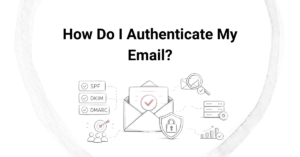
- Authenticate your domain first: Set up SPF, DKIM, and DMARC records before sending a single email. Authentication is the foundation that makes all other warmup efforts meaningful.
- Segment by engagement: Begin with subscribers who have opened or clicked recently. Their positive responses build reputation faster than sending to cold or unverified contacts.
- Clean your list before you start: Remove invalid, inactive, and risky addresses before warmup begins. Sending to bad addresses during warmup inflates bounce rates at exactly the wrong moment.
- Follow a gradual volume schedule: Increase sending volume on a predictable cadence, typically doubling volume every few days or weekly, depending on your target volume.
- Monitor key metrics daily: Track open rates, bounce rates, complaint rates, and spam folder placement throughout the warmup period. Early warning signs are much easier to address before they escalate.
- Maintain consistent sending patterns: Avoid sending spikes or long gaps during warmup. Consistency signals predictable, trustworthy behavior to mailbox providers.
The warmup period is also an excellent time to refine your content and subject lines, since higher engagement during this phase directly accelerates reputation building.
How Email Industries helps with domain warmup
We specialize in helping businesses navigate domain warmup and email migrations without the guesswork or the costly mistakes that come from going it alone. Our team brings decades of hands-on deliverability experience to every engagement, giving you a clear, structured path from day one of your warmup through full sending volume.
Here’s how we support your domain warmup success:
- Authentication audits: We verify that your SPF, DKIM, and DMARC records are correctly configured before warmup begins, removing one of the most common causes of warmup failure.
- List validation with Alfred: Our email verification tool identifies invalid, risky, and potentially harmful addresses so your warmup starts with the cleanest possible list.
- Custom warmup schedules: We build volume ramp-up plans tailored to your specific program size, audience, and timeline.
- Ongoing monitoring and troubleshooting: We track deliverability signals throughout the warmup period and intervene quickly if metrics move in the wrong direction.
- Migration support: For teams switching ESPs or launching new sending infrastructure, we coordinate every aspect of the transition to protect your sender reputation.
Domain warmup done right protects the revenue and engagement your email program generates every day. If you’re preparing for a migration, launching a new domain, or recovering from deliverability issues, we’re here to help. Reach out and contact our team to start building a warmup strategy that works.
Related Articles
- What documentation do full service agencies require during setup?
- How do you test deliverability before completing an email platform migration?
- How do you recover a domain reputation after poor warmup?
- What are the biggest mistakes made during domain warmup?
- How do you migrate to a new email platform without losing deliverability?
- How do mailbox providers evaluate a new sending domain?
- How do you start a domain warmup process?
- When should you pause your IP warming schedule?
- How do ESPs handle IP warming for new senders?
- What is domain warmup in email marketing?
- What lead magnet strategies do email agencies recommend?
- How do agencies develop email content strategies?
- How do agencies develop annual email marketing plans?
- How do agencies handle domain reputation management?
- How do agencies set up proper email authentication?