
Starting with a new IP address for email sending is one of the most delicate phases of any email program. Get it right, and you build a strong foundation for long-term inbox placement. Rush it or misread the signals, and you risk damaging your sender reputation before you even hit your stride. One of the most common questions senders ask during this process is: When is it actually safe to stop warming?
Understanding what a good sender reputation score looks like before ending IP warming is critical to protecting your deliverability over the long term. This guide walks through everything you need to know, from what reputation scores actually measure to the specific signals that tell you your warm-up is genuinely complete.
What is a sender reputation score in email deliverability?
A sender reputation score is a numerical or categorical rating assigned to an IP address or sending domain that reflects how trustworthy that sender appears to mailbox providers. It is calculated based on behavioral signals such as spam complaint rates, bounce rates, engagement levels, and sending consistency. The higher your score, the more likely mailbox providers are to deliver your mail to the inbox.
Different platforms measure reputation differently. Tools like Google Postmaster Tools use a tiered system (Low, Medium, High, Very High), while services like Sender Score by Validity use a 0-to-100 numerical scale. Mailbox providers also maintain their own internal reputation models that are not publicly visible, which is why observable metrics like engagement and complaint rates matter just as much as any third-party score.
Reputation is not static. It shifts with every campaign you send. A single high-complaint mailing can drop a previously strong score, while consistent, well-engaged sending gradually builds it back up. This dynamic nature is exactly why IP warming requires patience and monitoring rather than a fixed timeline.
What is IP warming and why is it necessary?
IP warming is the process of gradually increasing sending volume from a new or dormant IP address to establish a positive reputation with mailbox providers. It is necessary because mailbox providers treat unfamiliar IP addresses with suspicion. A brand-new IP with no sending history has no reputation at all, which means high-volume sending from day one will almost certainly trigger filtering or blocking.
When you warm an IP, you start by sending small volumes to your most engaged subscribers. These recipients are most likely to open, click, and not mark your mail as spam, which sends positive signals to mailbox providers. Over weeks, you incrementally increase volume while monitoring how providers respond. This gradual ramp gives providers enough data to build a picture of your sending behavior before you reach full volume.
The need for IP warming applies in several scenarios beyond simply acquiring a new IP address:
- Switching to a new email service provider or sending infrastructure
- Reactivating an IP that has been dormant for several months
- Launching a new sending domain alongside a new IP
- Migrating from a shared IP to a dedicated IP environment
Our Migrations and Warmups resource covers the full scope of scenarios where a structured warm-up plan is essential.
What sender reputation score is considered good enough to stop warming?
On a 0-to-100 scale, a sender reputation score of 80 or above is generally considered a solid threshold before ending IP warming. In Google Postmaster Tools, a consistent “High” or “Very High” domain reputation rating signals that warming has been effective. However, no single score should be your only exit criterion. The score must be stable across multiple campaigns, not just a one-time peak.
What matters more than hitting a specific number is the trend. A score that has climbed steadily from low to high over several weeks of sending reflects genuine reputation building. A score that jumps after one lucky send and then fluctuates is not a reliable indicator that warming is complete.
Consider these score benchmarks as a practical guide:
- 90-100 (Sender Score scale): Excellent. Warming is almost certainly complete if other signals align.
- 80-89: Good. It may be appropriate to consider ending warming if engagement metrics are strong and complaint rates are low.
- 70-79: Moderate. Continue warming and investigate any friction points before scaling up.
- Below 70: Concerning. Do not end warming. Revisit list quality, content, and sending practices.
Remember that reputation scores are a lagging indicator. They reflect what has already happened, not what is happening right now. That is why you should always review scores alongside real-time engagement and complaint data.
How do you check your sender reputation score during warm-up?
You can check your sender reputation score during IP warming using a combination of free and paid monitoring tools. The most widely used options are Google Postmaster Tools for Gmail-specific reputation data, Sender Score by Validity for a broad IP reputation metric, and Microsoft SNDS (Smart Network Data Services) for Outlook and Hotmail inbox intelligence.
Google Postmaster Tools
Google Postmaster Tools gives you domain and IP reputation data segmented by day, along with spam rate trends and delivery error reports. To use it, you need to verify ownership of your sending domain. This is one of the most valuable free tools available because Gmail represents a significant share of most B2C email audiences.
Sender Score and Microsoft SNDS
Sender Score provides a daily numerical score for your IP address based on data aggregated from a large network of mailboxes. Microsoft SNDS shows complaint rates, trap hits, and filter verdicts for traffic reaching Microsoft-hosted inboxes. Using all three tools together gives you a more complete picture than relying on any single source.
Beyond dedicated reputation tools, your ESP’s own reporting dashboard is a critical monitoring resource. Track bounce categories, complaint rates per campaign, and open-rate trends. Any sudden shifts in these numbers during warm-up deserve immediate attention before you increase volume further.
What other signals confirm your IP warm-up is complete?
Beyond reputation scores, several behavioral and performance signals confirm that IP warming is complete. These include consistently low spam complaint rates (below 0.1%), low hard bounce rates (below 2%), stable or improving open rates across campaigns, and no active blocks or deferrals from major mailbox providers. Taken together, these signals paint a more reliable picture than any score alone.
Here are the key signals to look for before declaring your warm-up finished:
- Complaint rate stability: Complaints should be consistently below 0.1% and ideally trend downward as you ramp volume.
- Bounce rate control: Hard bounces above 2% suggest list quality issues that will continue to hurt reputation at scale.
- Engagement consistency: Open and click rates should remain stable as volume increases, not drop sharply when you scale up.
- No throttling or deferrals: If mailbox providers are deferring your mail during warm-up, that is a signal to slow down, not speed up.
- Inbox placement confirmation: Use seed-list testing or inbox placement tools to verify that your mail is landing in the inbox rather than spam or promotions folders.
A warm-up is not complete simply because a calendar schedule says so. Volume ramp schedules are a guide, not a guarantee. Your actual sending behavior—and mailbox providers’ responses—determine when you are truly ready to operate at full scale.
What mistakes can hurt your sender reputation during IP warming?
The most damaging mistakes during IP warming include sending too fast too soon, mailing unengaged or unverified contacts, ignoring complaint and bounce signals, and failing to authenticate your sending domain properly. Any one of these errors can stall or reverse the reputation progress you have worked to build.
Scaling volume too aggressively
Jumping from a few hundred emails per day to tens of thousands overnight is one of the fastest ways to trigger spam filters. Mailbox providers notice sudden volume spikes and treat them as suspicious. A gradual, consistent ramp is far safer than an aggressive schedule driven by business pressure.
Sending to cold or unverified lists
Warming a new IP with a list that has not been cleaned or verified is a recipe for high bounce rates and spam trap hits. Both are devastating to a new IP’s reputation. Always start warming with your highest-quality, most recently engaged subscribers and work outward from there.
Skipping or misconfiguring authentication
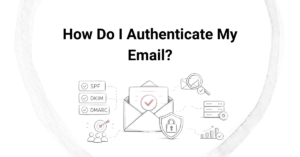
SPF, DKIM, and DMARC are not optional. Sending without proper authentication during warm-up signals to mailbox providers that your infrastructure is not trustworthy. Authentication failures can suppress reputation gains even when your engagement metrics look healthy.
Ignoring feedback loop data
Feedback loops from major mailbox providers tell you exactly who is marking your mail as spam. Failing to suppress these addresses immediately means you keep sending to people who have explicitly rejected your mail, which drives complaint rates higher with every campaign.
How Email Industries Helps with IP Warming Strategy
We have spent more than two decades helping brands navigate the complexity of IP warming and email deliverability. Whether you are migrating to a new sending infrastructure, launching a dedicated IP for the first time, or recovering from a reputation setback, we bring the expertise and tools to guide you through every stage of the process.
Here is what working with us on an IP warming strategy looks like in practice:
- Custom warm-up planning: We build volume ramp schedules tailored to your list size, sending frequency, and audience engagement profile rather than applying a one-size-fits-all template.
- Real-time reputation monitoring: We track your IP and domain reputation across major mailbox providers throughout the warm-up, flagging issues before they become serious problems.
- List hygiene and validation: Using our Alfred email verification tool, we help ensure you are warming with clean, verified contacts that will generate positive signals rather than complaints and bounces.
- Authentication audits: We verify that your SPF, DKIM, and DMARC records are correctly configured so your warm-up builds on a solid technical foundation.
- Ongoing deliverability consulting: Beyond the warm-up itself, we help you maintain the reputation you have built and respond quickly to any future disruptions.
If you are planning an IP migration or want expert guidance on whether your current warm-up is on the right track, we are here to help. Reach out and learn more about our Migrations and Warmups services, or simply get in touch with our team directly to talk through your specific situation.
Related Articles
- How does DMARC protect your email from spoofing attacks?
- Should you implement BIMI if you already have DMARC?
- Can a broken SPF record cause your emails to land in spam?
- What is DMARC and why do I need it?
- How long does it take to launch with an email advertising agency?
- What is a phased email platform migration and why does it matter?
- What are the biggest mistakes made during domain warmup?
- Why is domain reputation important during email migration?
- How do ecommerce email agencies increase online sales?
- What is email marketing automation setup?
- How do agencies develop annual email marketing plans?
- What competitive analysis do email agencies perform?
- How do agencies coordinate with existing IT departments?
- How do agencies set up proper email authentication?
- How do email advertising agencies create effective campaigns?